Exploring the Historic Sites of Kyrenia: A Traveler’s Guide
Kyrenia is the kind of place that rewards a slow walk, a curious eye, and one good pair of shoes. If you are planning a visit, do not treat it like a single monument stop. Treat it like a compact historical system: harbour, castle, abbey, mountain fortress, museum, then a long pause for coffee while the sea does the rest.
When travelers search for Kyrenia, they usually have the same questions in mind: Which sites are actually worth the climb? How much history fits into one day? Where should I start if I only have a short stay? And what makes this town more than a pretty coastline? As Mark Twain put it, “Travel is fatal to prejudice”, and Kyrenia is a clean example of why. The town’s layers make sense only when you stand in front of them: Kyrenia Castle, Bellapais Abbey, and the mountain strongholds around the city all tell different parts of the same story.
The challenge is not whether Kyrenia has enough history. It does. The challenge is choosing a route that lets you see the town without turning the day into a blur of photos and missed details. Kyrenia sits at the meeting point of harbour trade, medieval power, religious architecture, and defensive building. You can see that clearly in the city overview on Britannica’s Kyrenia entry and in the more site-specific notes for the old harbour and St. Hilarion Castle. Read those as a backdrop, then use this guide to turn the history into a sensible walking-and-driving itinerary.
By the end, you will know which historic sites to prioritize, how to pace them, what each one adds to the Kyrenia story, and how to fit the best of the town into one satisfying trip. If you want more North Cyprus travel writing after this, keep the blog open. If you are planning a broader stay and want to pair sightseeing with trip planning, you can also browse the services page. And if you want the bigger site picture first, start at the home page.
A quick route through Kyrenia’s history
If I were mapping the day from scratch, I would think of Kyrenia as a short route with five meaningful stops. The structure matters because it keeps the town from feeling like a pile of disconnected ruins. Start with the harbour fortress, move to the waterfront, climb into the hills, then come back down to the old town. That sequence makes the landscape read like a sentence instead of a postcard.
| Site | Why it matters | Best pace | Practical tip |
|---|---|---|---|
| Kyrenia Castle and Shipwreck Museum | The clearest introduction to the town’s layered military and maritime past | 60 to 90 minutes | Go early so you can enjoy the harbour after the museum |
| Kyrenia Harbour | The town’s historic face, where trade and tourism still meet | 45 to 60 minutes | Stay for an unhurried coffee or late lunch |
| Bellapais Abbey | A Gothic monastic ruin with a long cultural afterlife | 90 minutes to 2 hours | Plan for soft light in the late afternoon if you can |
| Saint Hilarion Castle | The mountain fortress that explains the defensive logic of the region | Half a day | Wear shoes that can handle uneven stone and steep paths |
| Icon Museum and old church quarter | A quieter look at the spiritual memory of the town | 30 to 45 minutes | Pair it with a slow walk through the nearby streets |
Terms that make the history easier to read
Before diving into the sites, a few words will help the history click into place. Kyrenia is not one story; it is several centuries sitting on the same coastline.
- Lusignan – the French royal dynasty that ruled Cyprus in the medieval period and left a strong mark on castles and churches.
- Venetian – a reference to the later defensive redesigns made when artillery changed the rules of warfare.
- Ottoman – the period after 1570, when the castle and town took on a new imperial layer.
- Shipwreck Museum – the museum inside Kyrenia Castle that protects one of the town’s most famous archaeological stories.
- Abbey – a monastic complex; in Bellapais, this is not an abstract label but a ruin with real architectural weight.
- Fortress – a defensive stronghold, usually placed for height, control, and visibility. Saint Hilarion is the purest example in this guide.
The point of the vocabulary is simple: once you know which period built what, the town stops looking like a scenic collage and starts looking like a record of power, trade, and survival.
The historic sites worth your time
1. Kyrenia Castle and the Shipwreck Museum
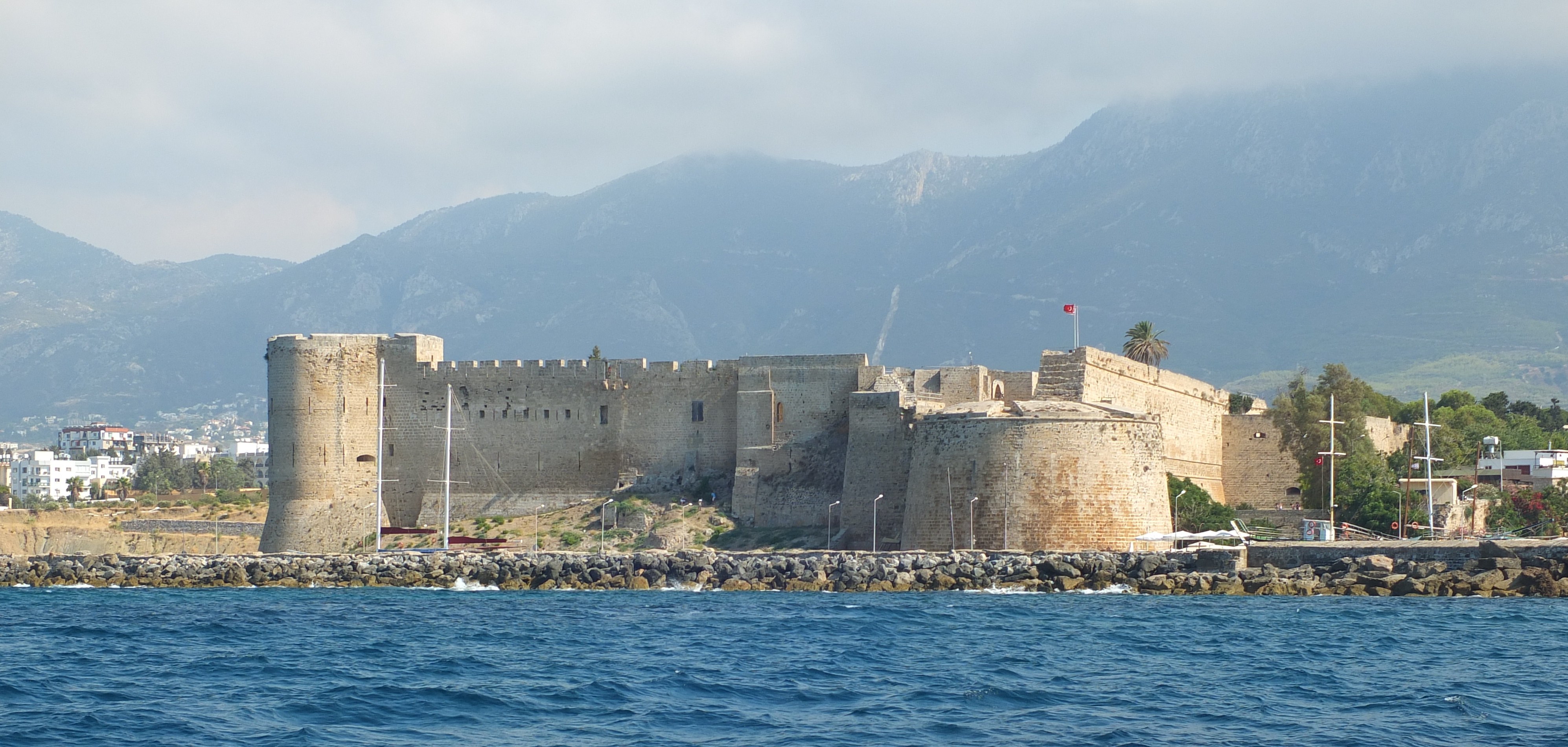
Kyrenia Castle is the obvious first stop because it is the piece that makes the harbour make sense. The fortress sits directly by the waterfront and has accumulated layers from different rulers over time. The broad shape you see today reflects medieval and later Venetian changes, but the deeper story is that this site was always about control: control of the harbour, control of the town, control of movement along the coast. For a detailed overview, the Kyrenia Castle article is a useful starting point, and Britannica’s page on Kyrenia adds the larger city context.
What makes the castle more than a shell is the shipwreck museum inside it. That is the detail that changes a quick visit into a memorable one. A fortress is easy to understand; a preserved shipwreck inside a fortress tells you the town was never just a military point. It was a maritime system with people, goods, and risk moving through it.
Visitor tip: start here before the heat and the crowds build. Walk the walls first, then slow down in the museum rooms. The castle is a site for looking outward over the harbour, but also inward at how the town defended itself. If you rush the galleries, you miss the point.
- Focus on the viewpoints toward the sea and the old port.
- Spend enough time to compare the fortress levels, not just the entrance.
- Let the shipwreck material reframe the site as both military and maritime history.
2. Kyrenia Harbour and the old waterfront
After the castle, I always recommend the harbour itself. This is where Kyrenia turns from monument into atmosphere. The waterfront is not simply decorative; it is the reason the castle exists where it does. The town’s historic centre grew around access to the sea, and the old harbour still carries that logic even when the day has shifted into leisure and dining.
For a clear sense of the waterfront’s role in the visitor experience, see the Kyrenia Harbour guide. It is easy to dismiss harbours as “nice places to sit,” but this one is doing much more. It is the visual seam between old power and modern hospitality, between military architecture and the easy rhythm of restaurants, boats, and shaded walks.
Visitor tip: do not treat the harbour as an afterthought. Build a pause into the schedule. Sit down long enough to notice how the fortress, the water, and the surrounding buildings line up. That alignment is the town’s historical signature.
- Walk the edge of the harbour before lunch to see the light on the stone.
- Use the waterfront as your reset point between the castle and the hill sites.
- Return in the evening if you want the most relaxed version of the town.
3. Bellapais Abbey
Bellapais Abbey is where the guide changes pace. The first two sites are about maritime control and defence. Bellapais is about memory, devotion, and the strange survival of beauty after political change. The abbey sits above Kyrenia in the hills, and the climb alone changes the mood. You leave the harbour’s practical logic behind and enter a quieter, more reflective version of the region.
The abbey’s history is well covered in the Bellapais Abbey article. The key point for a visitor is not just that it is old. It is that the building still communicates scale, geometry, and a certain formal calm even in ruin. The refectory, cloister, and surviving Gothic details are enough to tell you what this place once meant without needing a lecture.
Bellapais also changes the emotional register of a Kyrenia trip. The harbour says commerce and defence. The abbey says ritual, discipline, and monastic order. Together they explain why Kyrenia was never only a port town. It was a place where power and belief kept meeting each other in stone.
Visitor tip: give Bellapais more time than your instincts tell you to. It is tempting to treat it as a quick scenic stop, but the site rewards a slower walk. If you can, arrive when the light is soft and the heat is gentler.
- Look at the cloister before you start taking photos; the layout is the real lesson.
- Watch the view back toward the coast. The abbey’s position matters as much as the ruin itself.
- Stay a little longer than planned if the site feels quiet. That quiet is part of the experience.
4. Saint Hilarion Castle
If Bellapais is about calm and architectural grace, Saint Hilarion Castle is about altitude, defence, and a very direct message: watch the road below. Perched in the Kyrenia Mountains, it is the strongest reminder that this region was built with strategic visibility in mind. The site is commonly described as the best preserved of the mountain strongholds, and you can read more on the Saint Hilarion Castle page or in North Cyprus’s own sightseeing notes for the fortress.
What I like about Saint Hilarion is that it makes the geography part of the lesson. You are not just looking at walls. You are looking at why the walls are here at all. The climb explains the castle. The castle explains the road. The road explains the historic fear of attack, movement, and control.
Saint Hilarion also forces you to slow down physically. You cannot fake your way through the site with a quick circuit and a phone camera. The steps, ledges, and uneven surfaces make the body participate in the visit. That is inconvenient, which is another way of saying it is memorable.
Visitor tip: save this for when you still have energy. It is the site most likely to punish poor footwear and overconfidence. Bring water, take breaks, and accept that this is a half-day stop if you want to do it properly.
- Wear shoes with grip; polished fashion footwear is a bad trade here.
- Take the mountain views seriously and the climb slowly.
- Leave enough time to enjoy the route back down without rushing.
5. The Icon Museum and the old church quarter
The quieter parts of Kyrenia often tell you the most. If the castle is the headline and Bellapais is the scenic chapter, the old church quarter and icon museum are the footnotes that make the whole thing human. A city can keep its identity through forts and abbeys, but it also keeps it through objects, rituals, and rooms that survive the centuries in a more modest form.
The icon museum is useful because it gives you a different angle on the town’s cultural memory. Instead of military architecture or monastery ruins, you see how devotional art and local religious life were preserved, stored, and interpreted over time. In a place like Kyrenia, that matters. History here is not only monumental. It is also domestic, spiritual, and sometimes carefully protected in quieter buildings.
Visitor tip: do not make this a rushed final stop after everything else. Use it as a balancing note. After stone walls and mountain climbs, a museum or old church quarter gives the trip a human scale again.
- Read the labels slowly and let the objects tell the story.
- Pair the museum stop with a walk through nearby streets so the transition feels natural.
- Notice how the town’s sacred art and its defensive sites belong to the same historical map.
A practical one-day route
If your time in Kyrenia is limited, here is the route I would use. It is not the only route, but it is a good one because it moves in a logical arc rather than a random checklist.
- Morning: start at Kyrenia Castle and the Shipwreck Museum.
- Late morning: walk the harbour and take a proper break.
- Early afternoon: head up to Bellapais Abbey.
- Mid-afternoon: continue to Saint Hilarion Castle if you still have energy.
- Late afternoon or another day: finish with the Icon Museum and the old church quarter.
The route works because it alternates scale. You begin with the built edge of the sea, move into the social heart of the harbour, then rise to the hill sites where distance and defence matter more than convenience. That rhythm keeps the day from flattening out.
If you prefer a slower visit, split the route into two days. One day for the harbour and castle. Another for Bellapais, Saint Hilarion, and the museum quarter. That version is probably better if you want photos, coffee stops, and enough time to actually absorb what you are seeing instead of merely collecting names.
Why these sites matter culturally
Kyrenia’s historic sites matter because they show how one town can hold several civilizations without turning into a museum prop. The town’s cultural value is not only that it is old. It is that its landmarks reveal how different powers used the same geography for different ends.
- Kyrenia Castle shows the military logic of the harbour and the town’s role as a defended coastal point.
- The harbour shows continuity. Even as the visitor economy changes, the shoreline still explains how Kyrenia grew.
- Bellapais Abbey preserves the religious and artistic dimension of the region’s medieval life.
- Saint Hilarion Castle turns the mountain range into a defensive map and proves that terrain shaped power.
- The Icon Museum and church quarter keep the spiritual memory of the town from being reduced to stone alone.
That is why I think Kyrenia works so well for travelers who like history but dislike dry lectures. The town gives you visible evidence. You can stand in the harbour, look toward the castle, climb the mountain, and see the same strategic logic from different angles. History does not feel abstract here. It feels arranged in front of you.
It also matters that these sites are close enough to combine, but distinct enough to deserve attention on their own. That balance is rare. Too many places either spread their heritage across a huge area or compress it into one overdone stop. Kyrenia does neither. It gives you a compact but layered route.
What I would tell a first-time visitor
If this is your first trip, do not try to “do Kyrenia” in one breath. That usually means rushing past the very places that make the town memorable. Instead, choose one of two approaches:
- Short stay approach: castle, harbour, Bellapais. That is the efficient version.
- Deeper stay approach: castle, harbour, Bellapais, Saint Hilarion, museum quarter. That is the version that gives the town room to speak.
Whichever version you choose, keep two rules in mind. First, start early. Kyrenia’s sites are easier to enjoy before the day gets crowded and hot. Second, leave room for wandering. The best part of the town is often not the monument itself but the walk between one site and the next.
If you are planning a longer North Cyprus stay, this is also where trip planning starts to matter. A clean itinerary, a sensible order, and some local context will save you more time than another hour spent guessing where to go next. That is exactly the kind of thing the services page can support, while the blog keeps the travel notes going if you want more ideas.
Conclusion
Kyrenia is a coastal town with a memory. You feel it in the harbour, in the castle walls, in the hillside abbey, and in the mountain fortress that watches over the road below. The town works because each site adds a different layer: defence, devotion, trade, and preservation. Put together, they give you a travel day that is both scenic and intellectually satisfying.
If I were sending a friend here for the first time, I would not tell them to chase everything. I would tell them to start with the castle, pause at the harbour, climb to Bellapais, and save Saint Hilarion for when they want the bigger landscape view. Add the museum quarter if you have time, and the town starts to read like a well-built story instead of a checklist.
Key points to remember:
- Kyrenia Castle is the best first stop for understanding the town’s military and maritime past.
- Bellapais Abbey adds the religious and architectural depth that many visitors miss.
- Saint Hilarion Castle is the clearest mountain fortress in the region and deserves proper time.
- The old harbour and museum quarter keep the visit grounded in everyday history, not just grand ruins.
- A slower route almost always gives you a better day than a rushed one.
Kyrenia is not trying to impress you with scale. It is trying to show you how much history can fit into a small space when geography, trade, faith, and defence all keep using the same coastline. That is the good part. It means the town is still readable. You just have to give it enough time.