WHO Draft Pandemic Agreement: What the April 2025 milestone meant
Updated June 22, 2026
The phrase “negotiations concluded” sounded final in April 2025, but the real story had two steps: agreement on draft text on April 16, followed by formal adoption on May 20, 2025.
That distinction matters because readers usually want to know:
- What exactly happened on April 16, 2025?
- Was the agreement already adopted on that date?
- What changed between the negotiation milestone and the formal vote?
- Why did WHO describe the moment as significant progress?
The WHO’s own April 16, 2025 news release, its Pandemic Agreement overview, and the May 20, 2025 adoption announcement make the sequence clear.
This article keeps the timeline straight and explains why the April milestone mattered even though it was not the final legal step.
Terminology and timeline
- Draft text: negotiated language prepared for formal consideration.
- Consensus on text: governments agree on the wording to move forward.
- Adoption: the World Health Assembly formally approves the instrument.
- Implementation: the much longer stage after adoption, signatures, and follow-up work.
What happened on April 16, 2025
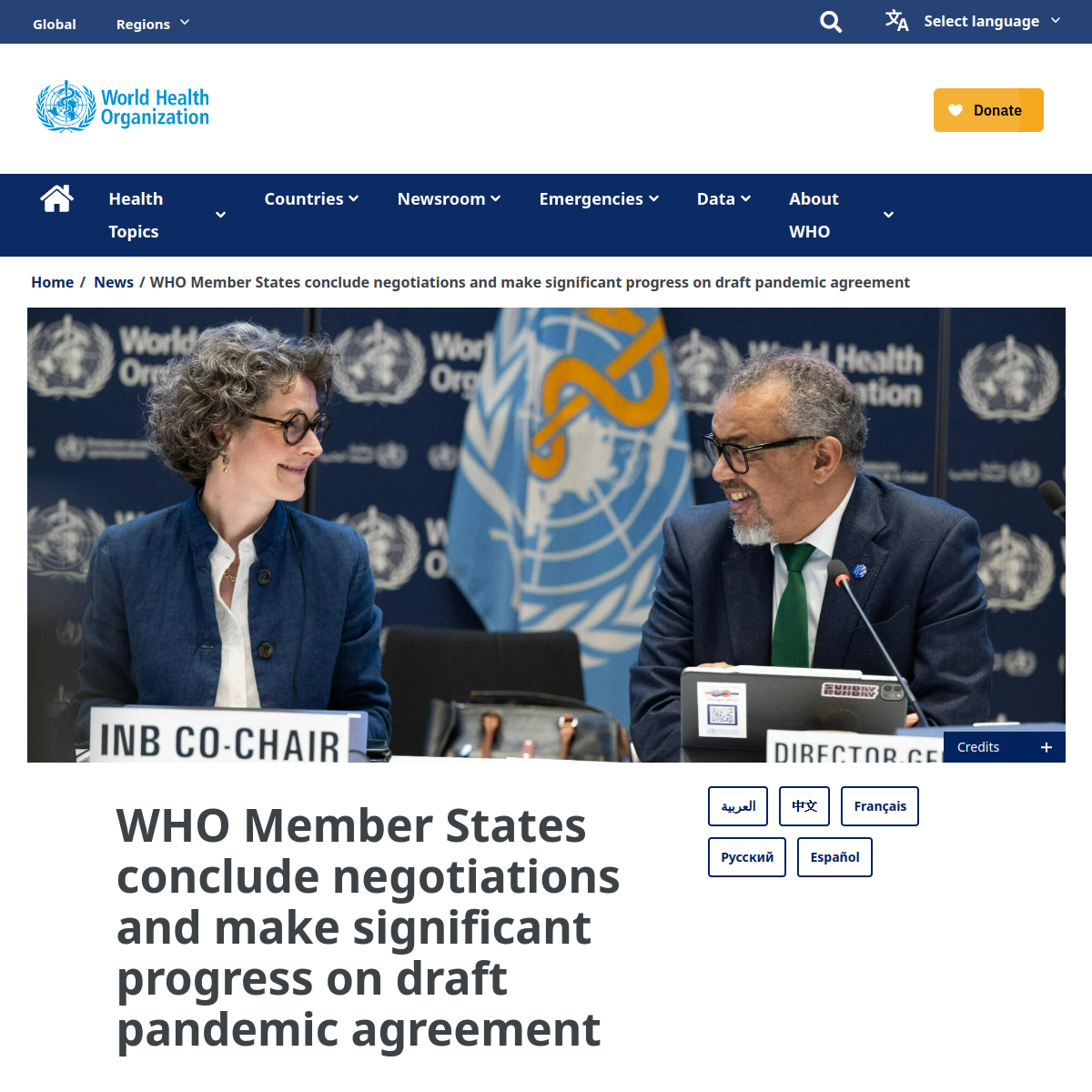
On April 16, 2025, WHO Member States reached consensus on a proposed pandemic agreement text after more than three years of negotiations. That was the breakthrough the April press release described. In plain terms, the negotiators got the draft to a stage where it could be sent onward for formal consideration.
That was important because pandemic governance talks had repeatedly hit questions of equity, sovereignty, financing, and access to tools such as vaccines and other medical countermeasures.
What did not happen on April 16
The agreement was not yet formally adopted on April 16. That is the part many headlines blurred. The next institutional step was consideration at the Seventy-eighth World Health Assembly in Geneva in May 2025.
WHO later confirmed that formal adoption happened on May 20, 2025. Keeping those two dates separate helps avoid overstating what the April announcement achieved.
Why the April milestone still mattered
The April milestone mattered because it showed that governments had moved from open-ended negotiation into a common draft. For international agreements, that is often the hardest stage. It does not settle every political dispute, but it establishes a shared text and a clearer path to decision-making.
In other words, April 16 was the moment the agreement became concrete enough for an actual adoption process, rather than an ongoing negotiation with no settled wording.
What happened after adoption
Even after May 20, the work did not end. WHO’s later Q&A explained that follow-up steps still involved the Pathogen Access and Benefit Sharing annex and the wider signature and ratification process. That is why it is more accurate to describe the agreement as a governance milestone than as an instantly complete operating system for global pandemic response.
Key takeaways
- April 16, 2025 was the draft-text breakthrough.
- May 20, 2025 was the formal adoption date.
- The April announcement mattered because it moved negotiations into a finalized draft stage.
- Adoption did not mean implementation was instantly complete.
- For this topic, exact dates are essential to avoid confusion.