7 Unique Souvenirs to Bring Back from North Cyprus
The best souvenirs are the ones that still make sense when you unpack them at home. Not the airport-rack noise. Not the plastic trinket that sheds glitter for six months and then disappears into a drawer. I mean the pieces that keep a place alive: a craft, a flavor, a texture, a ritual.
If you are asking what should I bring back?, how do I spot something genuine?, what fits in a suitcase?, and what still feels useful after the holiday ends?, North Cyprus gives you a surprisingly good answer. Visit Cyprus notes that the island still has active traditions in lace, copperware, weaving, basketry, woodcarving, pottery, and other folk crafts, while UNESCO recognizes Lefkara lace as a living heritage tradition in Cyprus. Those two facts point in the same direction: buy the object, yes, but also buy the story behind the object. Visit Cyprus | UNESCO
I like souvenirs with a job to do. A coffee pot that becomes part of your morning routine. A lace runner that changes a table from ordinary to deliberate. A jar of syrup or preserve that opens weeks later and still tastes like the trip. That is the standard here: not souvenir as clutter, but souvenir as a small operating system for memory.
In this guide, I will walk through the souvenirs worth your suitcase space, where to buy them, and how to choose pieces that feel tied to the island rather than to a souvenir factory. If you want more North Cyprus travel context after this, the blog archive has more destination guides, and the services page covers trip-planning help for visitors who want a cleaner itinerary.
At a glance: the best souvenirs to bring home
| Souvenir | Why it matters | Where to look | Packing note |
|---|---|---|---|
| Lefkara lace and embroidery | Textile craft with a serious heritage story | Craft shops, artisan markets, museum stores | Pack flat and keep dry |
| Copperware and a mbriki | Useful kitchenware with island character | Metalwork shops, tourist craft outlets | Wrap well; check for sharp edges |
| Cyprus coffee | Easy to gift and easy to enjoy at home | Specialty grocers, local food shops | Seal tightly to protect the aroma |
| Olive wood items | Practical, durable, and naturally patterned | Woodcraft stalls and artisan markets | Choose smaller pieces for luggage |
| Pottery and ceramics | Strong visual identity and local usefulness | Potters, village workshops, craft shops | Bubble wrap or clothing works fine |
| Spoon sweets and carob products | Direct link to Cypriot food culture | Food stores, farm shops, markets | Check liquid limits if flying |
| Wine or Commandaria | Good for a host gift or a dinner table | Wine shops and reputable grocers | Put bottles in the center of luggage |
1. Lefkara lace and embroidered linen
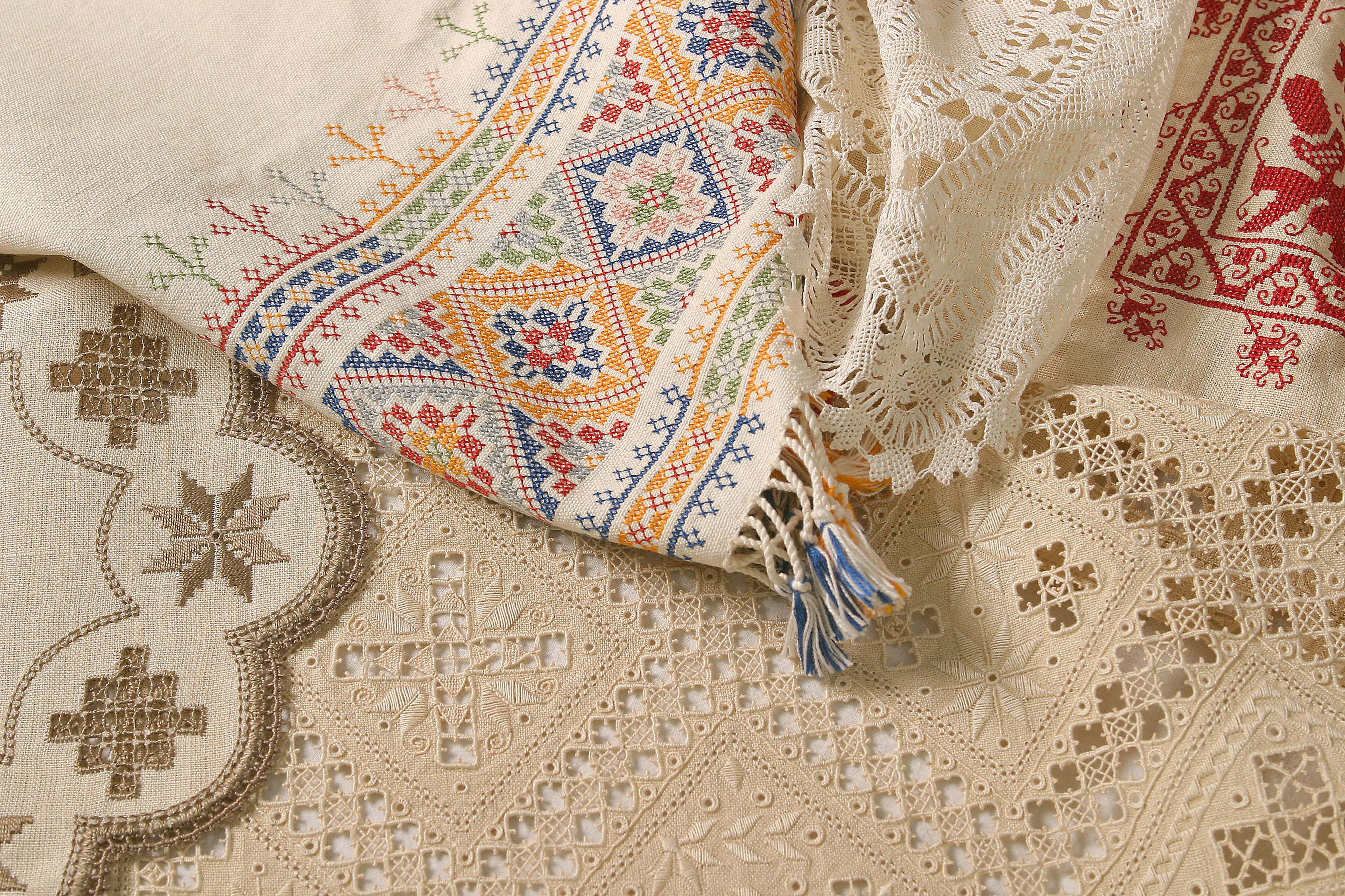
If you want one souvenir that says “Cyprus” with almost no explanation, start here. Lefkara lace, or Lefkaritika, is one of the island’s best-known craft traditions, and UNESCO lists it as intangible cultural heritage. That matters because it is not just decoration. It is a technique, a memory system, and a quiet proof that handwork still outlasts trends. Read the UNESCO listing if you want the cultural background in official form.
What should you buy? Table runners, doilies, handkerchiefs, small framed pieces, or embroidered linens that can be used rather than stored forever. The better pieces usually show consistency in the stitch work and a pattern that feels intentional rather than crowded. If the seller can explain how the piece was made, that is a good sign. If they shrug and point at a shelf, keep walking.
For gifts, lace works because it is light, flat, and culturally legible. It also avoids the common souvenir trap of being too specific to one shelf in one airport. A good lace piece can live on a table, in a drawer, or in a frame, and it still retains its dignity.
2. Copperware and the mbriki
Cyprus has a long relationship with copper, and the craft still shows up in souvenir shops and workshops across the island. The object I would watch for most is the mbriki, the small long-handled pot used for Cyprus coffee. Visit Cyprus specifically notes that coppersmiths still make copper pots, kettles, and mbriki for coffee preparation. Their handicrafts guide is worth a look if you want to understand why these items matter beyond the gift-shop shelf.
A mbriki is a better souvenir than it sounds. It is functional, compact, and it turns the act of making coffee into a small ritual. If you bring back a packet of Cypriot coffee with it, the souvenir becomes a system: pot, grounds, and habit. That is the difference between an object and a routine.
When choosing copperware, look for a smooth finish, a sturdy handle, and a piece that feels balanced in the hand. Heavier is not always better, but flimsy is usually obvious. If the item is decorative only, fine. If you want to use it for heat, ask whether it is food-safe and how it should be cleaned. Copper likes attention. Neglect is how it develops character you did not ask for.
3. Cyprus coffee
If you only buy one consumable souvenir, make it coffee. Cyprus coffee is strong, traditional, and closely tied to the island’s coffee-house culture. Visit Cyprus explains the method clearly: finely ground coffee is cooked in a small pot, often the same style of mbriki mentioned above. The official guide to Cyprus coffee covers the brew itself and the small customs around it.
As a souvenir, the coffee is excellent because it is easy to gift and easy to use. Buy sealed packs from a reputable store, not loose bags that have been sitting in sunlight next to ten other aromatic casualties. If you already picked up a mbriki, you now have a complete set. If not, the coffee still works as a good standalone gift for anyone who likes to start the day with something slower than a capsule and less theatrical than a flavored syrup from a chain store.
For a better gift box, pair the coffee with a small note on how to make it: one heaped teaspoon per tiny cup, water, sugar if desired, then watch carefully so the froth rises without boiling over. That is the kind of practical detail that turns a souvenir into a remembered ritual.
4. Olive wood kitchenware
Olive wood is one of those materials that makes immediate sense. It is durable, naturally patterned, and useful without being loud. In North Cyprus, you will find spoons, serving boards, salad utensils, bowls, and small carved pieces made from local or regional wood. It is the sort of purchase that survives the first unpacking because it has a place in the kitchen before the trip is even over.
The best olive wood pieces usually have visible grain, a smooth but not plastic finish, and enough thickness to feel substantial. Avoid pieces that are heavily lacquered if you plan to use them for food. The point is not to buy a shiny object. The point is to buy a tool with some warmth in it.
Olive wood is also a practical souvenir for travelers who do not want fragile things. It does not require the same level of babying as ceramics or glass, and it can be packed inside clothing without drama. That makes it one of the smarter choices if your return flight already contains snacks, laundry, and the usual travel chaos.
5. Handmade ceramics and pottery
Pottery is one of the cleanest answers to the question “what should I bring back that feels local but not kitschy?” A bowl, plate, jug, or small vase can do the job. Ceramics travel well if they are wrapped properly, and they look better in a home than most souvenir objects do. A handcrafted mug on a kitchen shelf can remind you of a trip every single morning without trying too hard.
Cyprus has a long pottery tradition, and the material culture is part of the island’s wider craft identity. The shapes vary, but the pattern is usually the same: earth, fire, skill, repeat. That is a decent summary of good souvenirs too. If you see a piece that is beautifully uneven in the right way, you are probably looking at something made by a person, not a machine impersonating a person.
What should you look for? A stable base, a glaze without cracks, and a form that is useful enough to justify its shelf space. Small plates and bowls are often the easiest gifts. Larger jugs or decorative pieces are fine if you are prepared to wrap them carefully. Travel is mostly logistics dressed up as romance, and ceramics are where that becomes obvious.
6. Spoon sweets, carob products, and local preserves
Food souvenirs are underrated because they are the least pretend version of travel memory. You do not have to display them. You do not have to dust them. You just eat them. In North Cyprus and across the island, that usually means spoon sweets, carob syrup, fruit preserves, honey, nuts, and other shelf-stable treats.
Spoon sweets are especially useful as gifts because they are unmistakably local and easy to explain. They also have the right balance of novelty and practicality. A jar of sweet preserve is never going to become a design object, which is good. It should remain edible. That is the point.
Carob products deserve a mention of their own because they are one of the island’s more characteristic flavors. Carob syrup can be poured over yogurt, ice cream, or desserts, and it gives you a taste of the region long after the trip is over. If you buy edible souvenirs, check the seal, check the expiration date, and make sure the jar is packed upright. Nothing clarifies travel discipline like leaked syrup on clean clothes.
7. Wine, Commandaria, and other bottle-sized gifts
For adults who enjoy a proper host gift, a bottle of local wine or Commandaria is a straightforward choice. Commandaria in particular has deep roots in Cypriot wine history, and it makes sense as a souvenir because it is compact, durable, and built for the dinner table. Visit Cyprus covers the island’s food and drink traditions in a way that makes the bottle feel connected to the broader culture, not just to the checkout line. The food and drink guide is a useful companion if you want to browse beyond coffee and sweets.
If you prefer not to travel with alcohol, use the same section of your suitcase for olive oil, carob syrup, or a nice local vinegar. The rule is the same: buy a product with a clear provenance, not a generic label that could have been printed anywhere. A good souvenir should have coordinates.
One practical note: bottles are only great souvenirs if they arrive intact. Put them in the center of the suitcase, surround them with clothing, and keep them away from anything hard. A bottle rolling loose in a bag is not a travel story. It is a cleanup project.
Where to buy souvenirs in North Cyprus
I am not interested in pretending that all souvenir shops are equal. They are not. Some are loaded with imported stock and a very optimistic price tag. Some are small, honest, and worth your time. The trick is to buy where the object still feels connected to the place.
- Old town and harbor shops: Good for quick browsing, lightweight gifts, coffee, lace, and decorative pieces. These are the easiest places to compare prices and styles.
- Craft workshops: Best if you want something handmade and want to see the work behind it. Ask questions. A real artisan usually enjoys answering them.
- Local markets: Good for food souvenirs, baskets, herbs, preserves, and small household items. Market shopping rewards patience more than speed.
- Museum and handicraft stores: Often the safest bet for authentic pieces, especially when you want something with cultural context rather than just a label.
- Village shops and roadside stalls: Worth a stop if you are exploring beyond Kyrenia. These can be ideal for olive oil, pottery, and woven goods.
If you want a compact research trail before you buy, the official Cyprus Handicraft Centre page is useful because it shows the range of traditional work still being made: embroidery, lace making, weaving, basketry, woodcarving, pottery, and metalwork. Even if you are shopping in North Cyprus rather than Nicosia, the craft vocabulary is the same. The object changes. The logic does not.
A simple shopping route if you only have one afternoon
If I had one afternoon in North Cyprus and wanted to come home with a small, high-quality haul, I would shop in a sequence rather than wander aimlessly. First stop: a craft shop or harbor-side boutique for the one item that needs the most comparison, usually lace, copperware, or pottery. That is where quality differences are easiest to see side by side.
Second stop: a food shop or specialty grocer for the edible gifts. This is where you buy Cyprus coffee, preserves, carob syrup, or a bottle of wine. Food gifts are easiest to evaluate because the label tells you a lot, assuming you actually read it. A clean seal, clear ingredients, and a sensible expiry date are better than a dramatic package.
Third stop: a smaller workshop or market stall for the object that is purely for you. That is where the souvenir stops being practical and starts being personal. Maybe it is a carved olive spoon. Maybe it is a small lace piece. Maybe it is a ceramic bowl that is slightly uneven in the way only handwork can be. The point is to leave room for one thing that does not have to justify itself to anybody else.
This sequence does two useful things. It keeps you from buying the first shiny item you see, and it spreads the risk. The expensive piece gets your early attention, the edible gifts get bought from a reliable place, and the small personal item gets chosen after you know what the trip is already telling you. That is a better system than impulse shopping, which is just nervousness with a price tag.
How to tell if a souvenir is worth buying
This is the part that saves money and luggage space. I use a simple filter: if a souvenir passes the use, story, and durability test, it is probably worth buying.
- Use: Can you use it, wear it, serve from it, or gift it without apology?
- Story: Can the seller explain where it came from and how it was made?
- Durability: Will it survive the trip home and the first month after unpacking?
- Honesty: Does it feel locally made, or is it simply themed to look local?
That last one matters more than people admit. A souvenir is not just an object; it is a claim. It claims to represent a place. If the claim is false, the purchase becomes decorative fraud with a smile. If the claim is true, even a small item can carry real weight.
Cultural significance: why souvenirs matter here
Souvenirs get dismissed as frivolous because people imagine them as junk. The better version is closer to cultural evidence. A lace runner says handwork still matters. A mbriki says daily ritual still matters. A jar of preserves says flavor still matters. That is not sentimentality. It is a record of what a place chooses to keep making.
UNESCO’s recognition of Lefkara lace matters here because it draws a line between generic tourism and living heritage. The point is not to collect things from a trip like trophies. The point is to support the continuity of skills that require time, patience, and buyers who can tell the difference between craftsmanship and mass production. A souvenir can be small and still be part of that chain.
There is also a practical side to cultural buying. When you buy from an artisan rather than a warehouse, you are more likely to get an object with a story attached. That story is valuable because it helps you remember the trip in detail rather than in a blur. The shop, the maker, the smell of the market, the awkward packing in your luggage later: these become part of the object’s life. That is how souvenirs work when they work well.
Packing and travel tips
Even the best souvenir can become a nuisance if you pack it badly. Keep the list short and the packaging sensible.
- Wrap ceramics and glass in clothing, not loose paper that will tear on contact with reality.
- Keep food gifts sealed and upright.
- Buy smaller versions of decorative objects if you are flying with hand luggage.
- Ask for a receipt if you are purchasing more expensive handmade items.
- Consider buying one or two excellent pieces instead of five forgettable ones.
There is no prize for returning with a suitcase full of regrets. The cleanest souvenir strategy is usually the one that keeps your bag manageable and your home uncluttered. That is not anti-shopping. That is respect for your future self.
If you are building a larger North Cyprus itinerary, it helps to plan souvenir shopping for the middle of the trip rather than the final hour before departure. That gives you time to compare prices, inspect quality, and replace anything broken before you leave. Souvenir shopping is much easier when it does not have to compete with boarding gates and low battery warnings.
Conclusion
North Cyprus is good souvenir territory because it rewards taste rather than volume. The strongest purchases are not the loudest ones. They are the pieces that carry a craft, a flavor, or a daily ritual home with you: lace, copper, coffee, wood, pottery, preserves, and a bottle for the dinner table.
If you keep one rule in mind, make it this: buy the object that still makes sense after the holiday is over. That is the test. If it will be used, displayed, or opened with pleasure, it is probably the right souvenir. If it only exists to prove you were there, maybe keep walking.
For more travel ideas after you shop, browse the North Cyprus blog guides or review the services page if you want help turning a short break into a tighter, better-planned trip. The best souvenir is useful. The second-best one is the plan that got you there.